

Hardwood Floor Water Extraction in Boone, IA
Trusted by 10,000+ Homeowners Across the USA
Water-Damaged Hardwood Floors in Boone, IA: What You Need to Know
Did you know that water-damaged hardwood floors can lead to costly repairs and even health hazards? In fact, according to the IICRC, up to 75% of hardwood floors that are not properly restored can develop permanent damage, resulting in costly replacements. Don't wait until it's too late. If you've experienced water damage in your Boone, IA home, it's essential to act quickly to prevent further damage and potential health risks.
Our team has helped countless homeowners in the area recover from water damage, and we're confident we can do the same for you. With over 165+ five-star reviews, you can trust that our team will treat your property with the care and respect it deserves. Our expert technicians will work tirelessly to restore your hardwood floors to their original glory.
- Expert water extraction and drying services to prevent further damage
- State-of-the-art equipment to ensure efficient and effective drying
- Comprehensive documentation for insurance claims to ensure you get the compensation you deserve
The Hardwood Floor Water Extraction Process: What to Expect
Our team follows a meticulous process to ensure your hardwood floors are restored to their original condition. From initial assessment to final inspection, we'll guide you through every step of the way. Our process ensures that every detail is considered, and every corner is cut.
Step 1: Initial Assessment and Water Extraction
Our technicians will assess the damage and extract the standing water from your hardwood floors using state-of-the-art equipment. This is a crucial step in preventing further damage and ensuring a successful restoration.
Step 2: Drying and Dehumidification
Next, we'll use specialized equipment to dry and dehumidify the affected area, ensuring that your hardwood floors are completely dry and free of moisture. This step is critical in preventing warping, buckling, and other forms of damage.
Step 3: Cleaning and Sanitizing
After the drying process is complete, our technicians will thoroughly clean and sanitize the affected area to remove any dirt, grime, or bacteria that may have accumulated. This ensures a healthy and safe environment for you and your family.
Step 4: Inspection and Final Touches
Finally, our team will conduct a thorough inspection to ensure that your hardwood floors are restored to their original condition. We'll make any necessary adjustments to ensure your floors look and feel like new.
Don't wait any longer to restore your water-damaged hardwood floors. Contact our team today to schedule a consultation and take the first step towards a healthier and safer home.
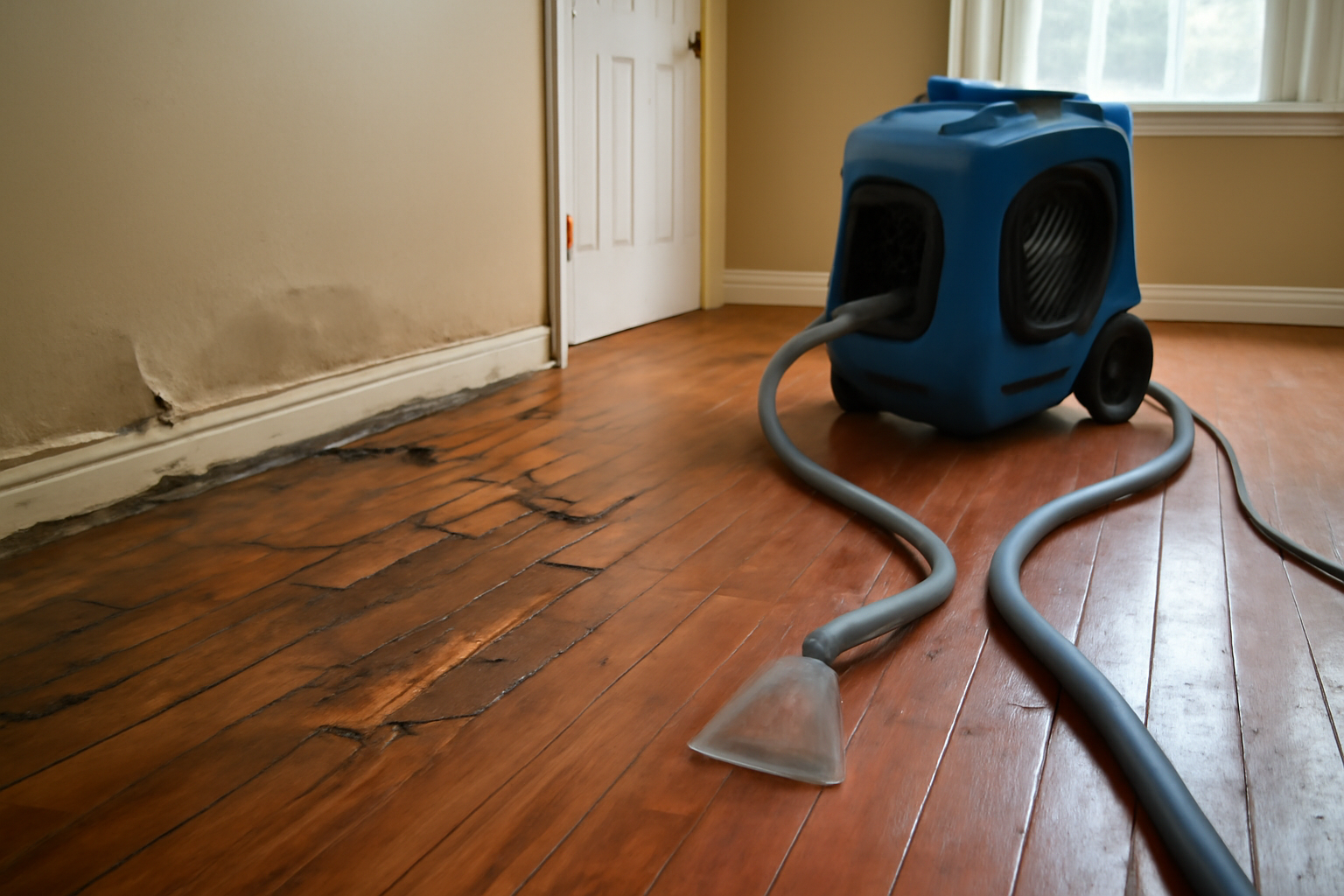
Warning Signs You Need Hardwood Floor Water Extraction
Catching the signs of water damage early on can save you money and prevent bigger problems down the line. Here are some common warning signs to look out for:
Musty Odors That Won't Go Away
If you notice a persistent musty smell in your home, it may be a sign of water damage. Don't ignore this warning sign, it could be a sign of mold growth or other health hazards.
Warped or Buckled Flooring
Warped or buckled flooring can be a clear indication of water damage. Don't delay, address this issue quickly to prevent further damage.
Discolored or Stained Flooring
Discolored or stained flooring can be a sign of water damage. Don't ignore this warning sign, it could be a sign of more extensive damage.
Water Stains or Rings
Water stains or rings on your hardwood floors can be a clear indication of water damage. Don't delay, address this issue quickly to prevent further damage.
Soft or Spongy Flooring
Soft or spongy flooring can be a sign of water damage. Don't ignore this warning sign, it could be a sign of more extensive damage.
Peeling or Cracking Paint
Peeling or cracking paint can be a sign of water damage. Don't ignore this warning sign, it could be a sign of more extensive damage.
Hardwood Floor Water Extraction vs. DIY: When to Call a Professional
| Situation | DIY? | Call a Pro? | Why |
|---|---|---|---|
| Small, isolated water damage | Yes | No | You can likely handle small water damage on your own. |
| Large, widespread water damage | No | Yes | A professional team can handle large-scale water damage more efficiently and effectively. |
| Hidden water damage | No | Yes | A professional team can detect hidden water damage and address it before it becomes a bigger problem. |
| Water damage with health hazards | No | Yes | A professional team can handle water damage with health hazards, such as mold growth or bacterial contamination. |
| Water damage with structural issues | No | Yes | A professional team can handle water damage with structural issues, such as warping or buckling floors. |
Don't risk further damage or health hazards by trying to handle water damage on your own. Call a professional team today to ensure a safe and successful restoration.
Hardwood Floor Water Extraction Cost in Boone, IA
The cost of hardwood floor water extraction in Boone, IA can vary depending on the severity of the damage, the size of the affected area, and local conditions. Here are some estimated price ranges for common scenarios:
| Service | Typical Price Range | What Affects Cost |
|---|---|---|
| Initial Assessment and Water Extraction | $500 - $2,500 | Severity of damage, size of affected area |
| Drying and Dehumidification | $1,000 - $5,000 | Size of affected area, type of equipment used |
| Cleaning and Sanitizing | $500 - $2,000 | Size of affected area, type of cleaning solution used |
| Inspection and Final Touches | $500 - $1,500 | Complexity of restoration, number of inspections required |
| More Services (mold remediation, structural repairs) | $1,000 - $5,000 | Severity of damage, complexity of repairs |
Exact pricing will depend on an on-site assessment. Our team offers free estimates and will work with you to create a customized plan that fits your budget and needs.
Service Areas Near Boone, IA
We serve the following communities in and around Boone, IA: Altoona, Ankeny, Beaverdale, Bondurant, Clive, Des Moines, Des Moines West, Earlham, Grimes, Johnston, Norwalk, Pleasant Hill, Polk City, Urbandale, West Des Moines, Windsor Heights.
Common Questions About Hardwood Floor Water Extraction
Q: How long does it take to restore my hardwood floors?
A: The length of time it takes to restore your hardwood floors depends on the severity of the damage, the size of the affected area, and the complexity of the restoration. Our team will work with you to create a customized plan that meets your needs and timeline.
Q: Will I need to replace my hardwood floors?
A: In some cases, yes, you may need to replace your hardwood floors if the damage is extensive or the floors are beyond repair. But, our team will work with you to find out the best course of action and provide a detailed estimate of any necessary repairs or replacements.
Q: Can I handle water damage on my own?
A: While it may be tempting to try to handle water damage on your own, it's often not the best course of action. Water damage can be complex and need specialized equipment and expertise to restore properly.
Q: How do I prevent water damage in the future?
A: There are several steps you can take to prevent water damage in the future, including installing a sump pump, ensuring proper drainage, and regularly inspecting your home for signs of water damage. Our team can provide you with a comprehensive plan to help you prevent water damage and maintain a safe and healthy home.
Q: Do you offer emergency services?
A: Yes, we offer emergency services 24/7. Our team is available to respond to your emergency needs and provide prompt and effective restoration services.
Check Our Other Relevant Services
Serving Boone, IA And Nearby Areas



