
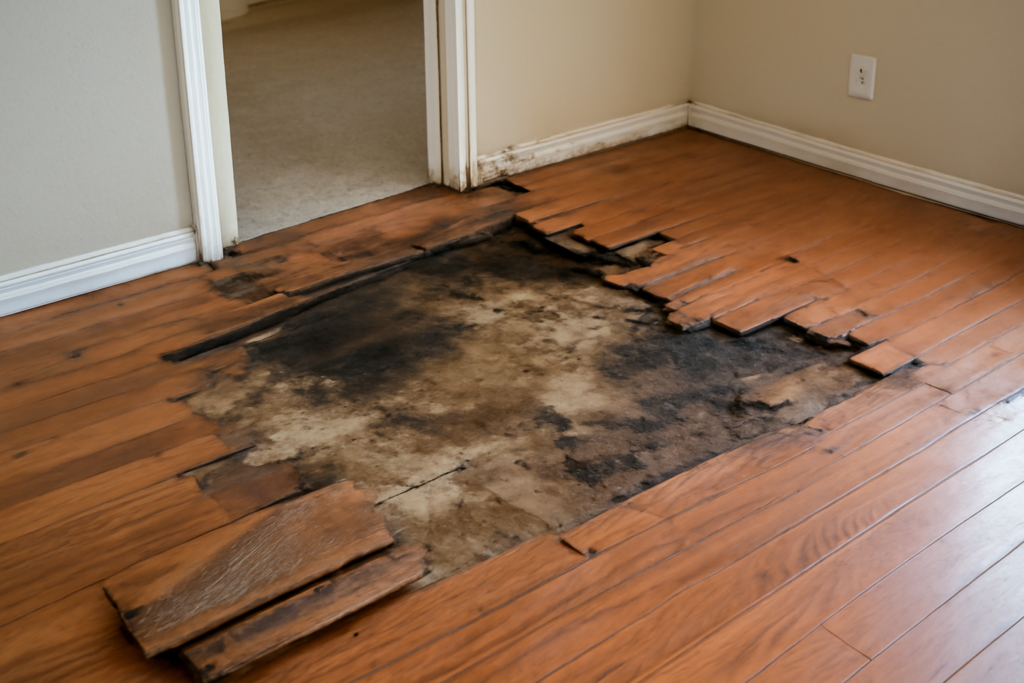
Flooring Replacement After Water Damage in Gilman, IA
Trusted by 10,000+ Homeowners Across the USA
Flooding Your Floors: What You Need to Know in Gilman, IA
Water damage to your floors can be devastating, but it's crucial to act quickly to prevent further damage and costly repairs. Don't wait for the water to soak deeper into your subfloor, causing irreparable damage. Call us right away if you notice water pooling on your floors or seeping through your walls. Timing is everything in water damage restoration. The sooner you respond the less damage you'll face.
Our team has helped many homeowners in Gilman, IA, and surrounding areas recover from water damage, and we're confident in our ability to help you too. With over 165 five-star reviews, we've earned a reputation for our professionalism, expertise, and dedication to customer satisfaction.
- Our team arrives quickly to assess the damage and begin the restoration process, reducing downtime and disruption to your daily life.
- We use state-of-the-art equipment and techniques to extract water, dry your floors, and prevent further damage.
- We work closely with your insurance provider to ensure a smooth claims process and maximum coverage.
How Our Team Handles Flooring Replacement After Water Damage
With flooring replacement after water damage, our team follows a rigorous process to ensure a thorough and efficient restoration. We understand that every minute counts in this situation, which is why we focus on rapid response times and 24/7 availability. Our team's expertise and specialized equipment enable us to tackle even the most complex water damage cases.
Step 1: Assessment and Planning
Our team conducts a thorough assessment of the damage to find out the extent of the water damage and the necessary steps to restore your floors. We'll identify the source of the water, assess the affected area, and develop a customized plan to address the issue. We'll work with you to find out the best course of action and provide a detailed estimate of the costs involved.
Step 2: Water Extraction
Using specialized equipment, our team will extract as much water as possible from your floors to prevent further damage. We'll use powerful pumps and wet vacuums to remove standing water, and our team will carefully inspect the area to ensure all water is removed.
Step 3: Drying and Dehumidification
Once the water is extracted, our team will use desiccant dehumidification equipment to dry your floors and prevent further damage. We'll also use specialized fans to circulate air and speed up the drying process. Our team will monitor the area to ensure the drying process is progressing as planned.
Step 4: Flooring Replacement
If the water damage is extensive, our team may need to replace your floors entirely. We'll work with you to select the best replacement flooring options, taking into account factors such as durability, maintenance, and aesthetics. We'll ensure a seamless transition to your new floors.
Step 5: Final Inspection and Clean-up
Once the restoration is complete, our team will conduct a final inspection to ensure the area is safe and clean. We'll remove any remaining debris and leave your property in better condition than before the damage occurred.
Don't delay, contact our team today to schedule your flooring replacement after water damage service. Time is of the essence in water damage restoration, and our team is here to help.
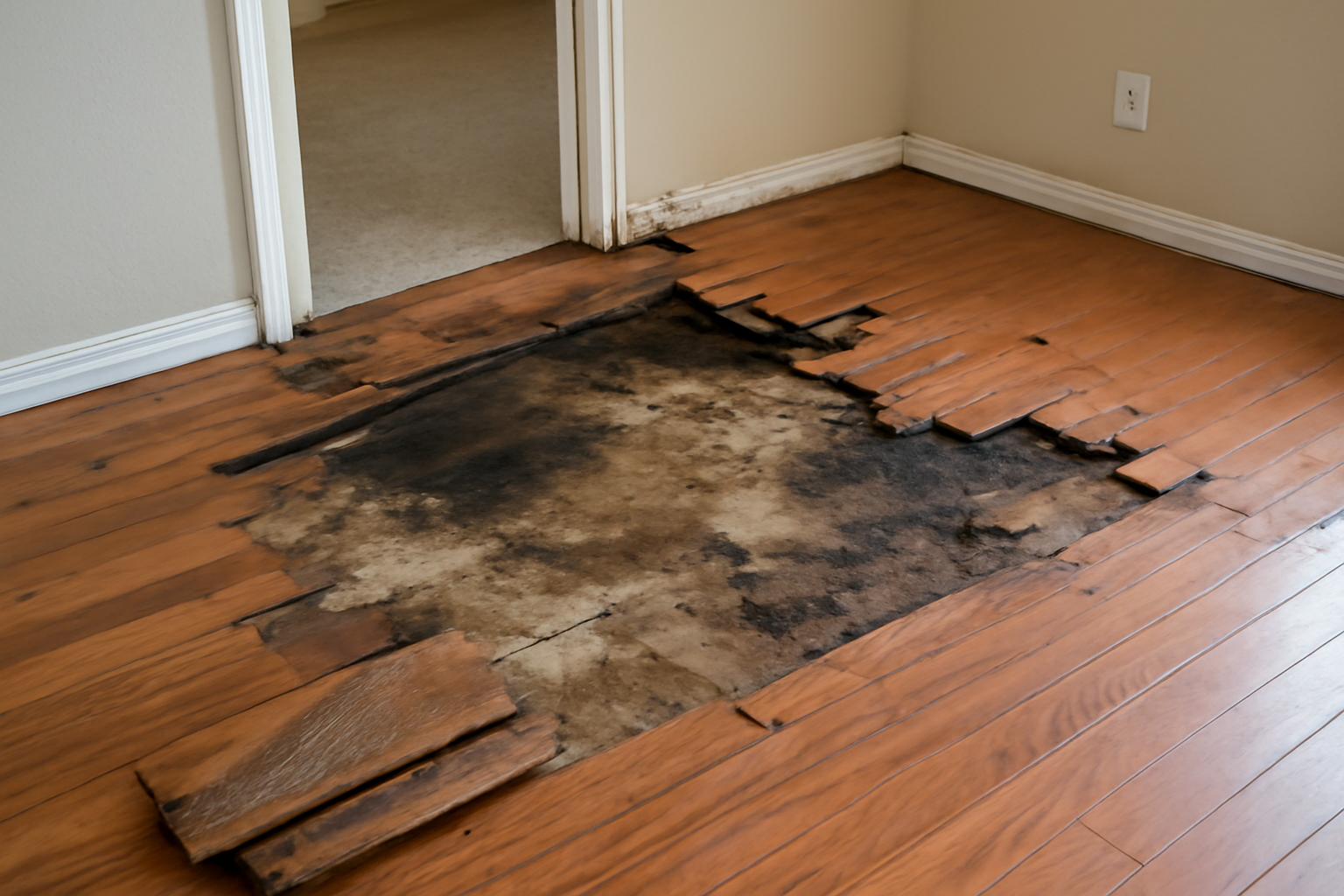
Warning Signs You Need Flooring Replacement After Water Damage
Water damage can be sneaky, and it's essential to catch the warning signs early to prevent further damage. Here are some common signs that show you need flooring replacement after water damage:
Musty Odors That Won't Go Away
If you notice a persistent musty smell in your home, it may be a sign of water damage. Don't ignore it this smell can be a sign of mold growth, which can spread quickly and cause serious health issues.
Warped or Buckled Floors
Warped or buckled floors can be a sign of water damage. Check for any signs of water seeping through your floors or walls, and address the issue quickly to prevent further damage.
Water Stains on Your Walls
Water stains on your walls can be a sign of water damage. Don't wait address the issue immediately to prevent further damage and costly repairs.
Discoloration or Fading
Discoloration or fading of your floors can be a sign of water damage. Check for any signs of water seeping through your floors or walls, and address the issue quickly to prevent further damage.
Soft or Spongy Floors
Soft or spongy floors can be a sign of water damage. Don't walk on them this can cause further damage and create a safety hazard.
Floors That Feel Cool to the Touch
Floors that feel cool to the touch can be a sign of water damage. Check for any signs of water seeping through your floors or walls, and address the issue quickly to prevent further damage.
Flooring Replacement After Water Damage vs. DIY: When To Call a Professional
| Situation | DIY? | Call a Pro? | Why |
|---|---|---|---|
| Water damage is minor, and you can easily clean and dry the area. | Yes | No | You can handle minor water damage yourself. |
| Water damage is extensive, and you notice signs of mold growth. | No | Yes | Mold growth can spread quickly and cause serious health issues. |
| You're not sure how to assess the damage or what equipment to use. | No | Yes | Professional help is necessary to ensure a thorough and efficient restoration. |
| You're dealing with a large area of water damage. | No | Yes | A large area of water damage needs specialized equipment and expertise. |
| You're unsure about the safety of your home or property. | No | Yes | A professional will ensure your safety and the integrity of your property. |
| You're dealing with a complex water damage case. | No | Yes | A professional will have the necessary expertise and equipment to handle complex water damage cases. |
Don't risk further damage or safety hazards by trying to handle flooring replacement after water damage yourself. Call a professional to ensure a thorough and efficient restoration.
Flooring Replacement After Water Damage Cost In Gilman, IA
The cost of flooring replacement after water damage can vary depending on the severity of the damage, the size of the affected area, and local conditions. These estimates are based on typical scenarios and may not reflect the actual cost of your restoration. Please note that prices may vary.
| Service | Typical Price Range | What Affects Cost |
|---|---|---|
| Water extraction and drying | $500 - $2,500 | Size of affected area, severity of damage, equipment needed |
| Flooring replacement | $1,000 - $5,000 | Size of affected area, type of flooring, labor costs |
| Desiccant dehumidification | $200 - $1,000 | Size of affected area, severity of damage, equipment needed |
| Final inspection and clean-up | $100 - $500 | Size of affected area, severity of damage, labor costs |
| Permit fees and inspections | $50 - $200 | Local regulations, type of damage |
Please note that exact pricing depends on an on-site assessment and may vary based on the specifics of your restoration. We offer free estimates to ensure you have a clear understanding of the costs involved.
Service Areas Near Gilman, IA
We serve the following communities: Ankeny, Altoona, Bondurant, Carlisle, Clive, Des Moines, Grimes, Johnston, Norwalk, Pleasant Hill, Urbandale, West Des Moines, Windsor Heights, and more.
Common Questions About Flooring Replacement After Water Damage
Q: What's the typical timeline for flooring replacement after water damage?
A: The timeline for flooring replacement after water damage varies depending on the severity of the damage and the complexity of the restoration. But, in most cases, we can complete the restoration within 3-5 days. Our team will work closely with you to ensure a smooth and efficient process.
Q: What's the cost of flooring replacement after water damage?
A: The cost of flooring replacement after water damage can vary depending on the severity of the damage, the size of the affected area, and local conditions. But, in most cases, the cost ranges from $1,000 to $5,000. We offer free estimates to ensure you have a clear understanding of the costs involved.
Q: Do I need to replace my entire floor after water damage?
A: Not always. In some cases, we may be able to repair or refinish your existing floors instead of replacing them entirely. Our team will assess the damage and provide a recommendation based on the severity of the damage and the type of flooring.
Q: What's the process for filing an insurance claim for flooring replacement after water damage?
A: Our team will work closely with your insurance provider to ensure a smooth claims process and maximum coverage. We'll guide you through the process and provide documentation to support your claim.
Check Our Other Relevant Services
Serving Gilman, IA And Nearby Areas



