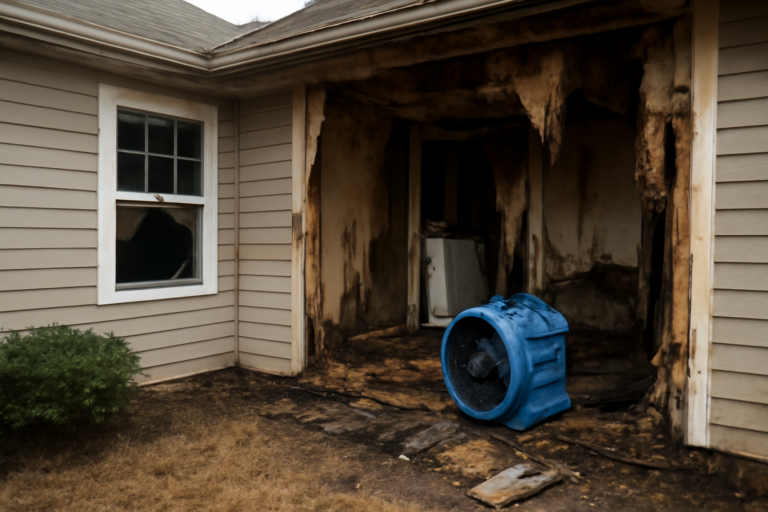
Ceiling Water Extraction in Dexter, IA
Trusted by 10,000+ Homeowners Across the USA
Ceiling Water Extraction in Dexter, IA: Expert Help for Local Homeowners
We've seen it all with ceiling water extraction in Dexter, IA. From burst pipes in older homes to appliance malfunctions in newer ones, our team has handled it. With years of experience under our belt, we know the ins and outs of this service, and we're here to make it easier for you.
Don't believe us? Check out our 165+ five-star reviews. Local homeowners choose our team specifically for ceiling water extraction because we understand the stress and disruption it brings. We're here to reduce that impact and make the process as smooth as possible.
- Fast response times - we'll be at your doorstep within 60 minutes of your call.
- Thorough water extraction and drying to prevent further damage.
- Expert equipment and techniques to ensure a successful outcome.
How Ceiling Water Extraction Works: A Step-by-Step Guide
The process of ceiling water extraction is more than just pulling water out of your ceiling. It involves a series of meticulous steps to ensure a successful outcome. Our team's process begins with a thorough assessment of the affected area, followed by the removal of any standing water and moisture.
Step 1: Assessment and Planning
Our team will inspect the affected area to find out the extent of the damage. This includes checking for signs of water intrusion, such as discolored drywall, warped flooring, and mineral deposits.
Step 2: Water Removal
Our equipment is designed to extract water quickly and efficiently reducing the risk of further damage. We use a combination of pumps and wet vacuums to remove standing water and moisture.
Step 3: Drying and Dehumidification
Our team will set up dehumidifiers and air movers to dry out the affected area. This process can take several days, depending on the severity of the damage.
Step 4: Cleaning and Disinfecting
Our team will thoroughly clean and disinfect the affected area to prevent the growth of mold and mildew.
Step 5: Repair and Restoration
Our team will work with you to repair and restore your property to its original state. This may include replacing damaged drywall, flooring, and other materials.
At this point, the process may seem overwhelming, but trust us - it's worth every penny. Our team has the expertise and equipment to handle even the toughest ceiling water extraction jobs.
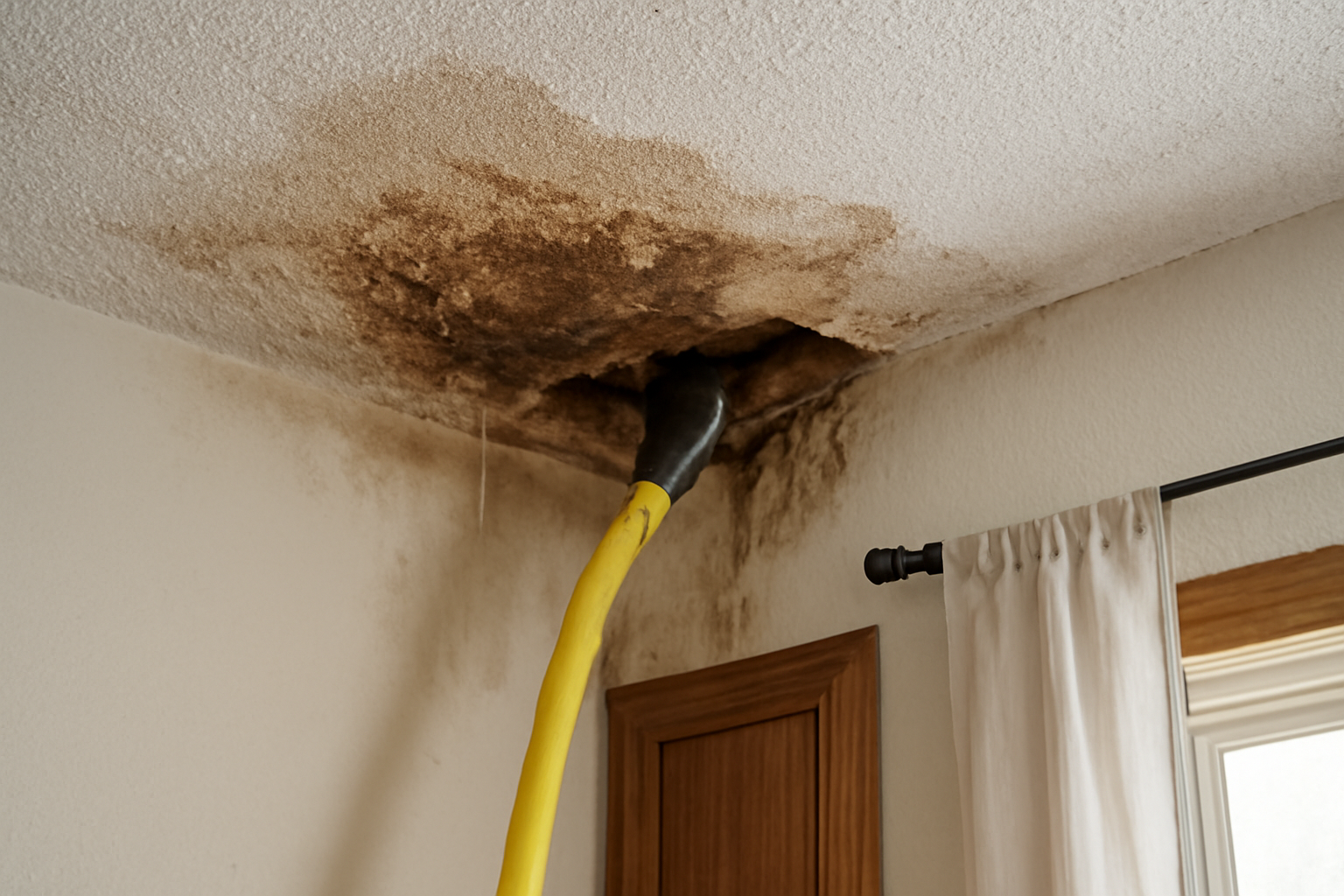
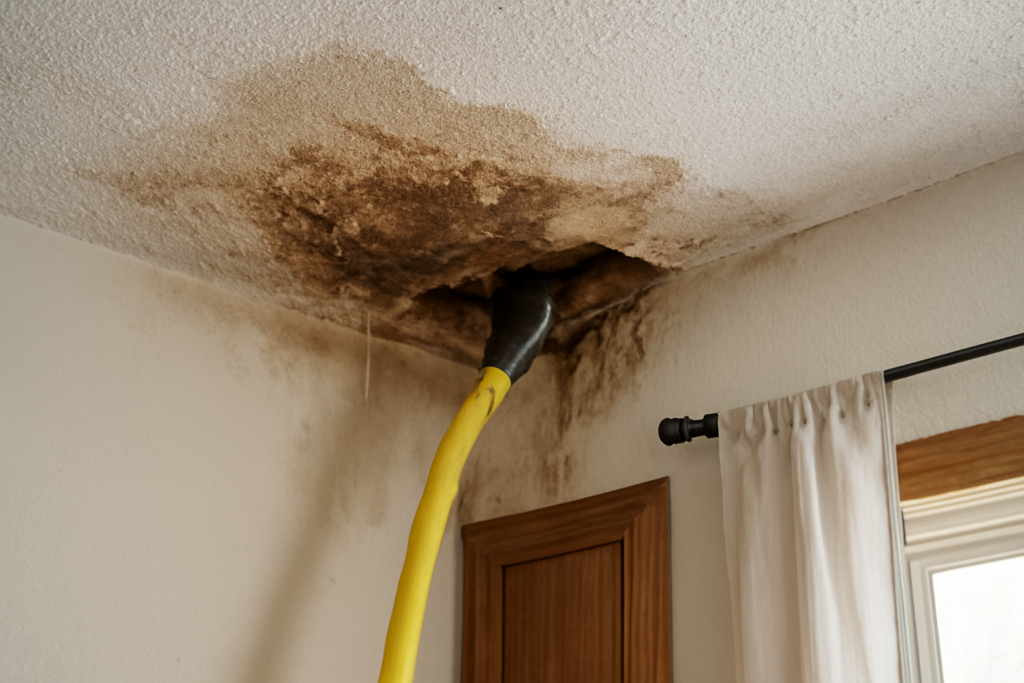
Warning Signs You Need Ceiling Water Extraction
Don't ignore these warning signs - catching them early can save you money and prevent bigger problems. Here are some common signs of ceiling water extraction you should be aware of.
Musty Odors That Won't Go Away
Don't ignore musty odors in your home as they can be a sign of water damage. Our team can help you identify and address the source of the smell.
Discolored Drywall or Ceiling Tiles
Discolored drywall or ceiling tiles can be a sign of water damage. Our team can inspect and repair the affected area to prevent further damage.
Warped or Buckled Flooring
Warped or buckled flooring can be a sign of water damage. Our team can assess and repair the affected area to prevent further damage.
Sagging Ceilings or Walls
Sagging ceilings or walls can be a sign of water damage. Our team can inspect and repair the affected area to prevent further damage.
Mineral Deposits or Stains
Mineral deposits or stains on your walls or ceiling can be a sign of water damage. Our team can inspect and repair the affected area to prevent further damage.
Ceiling Water Extraction vs. DIY: When to Call a Professional
| Situation | DIY? | Call a Pro? | Why |
|---|---|---|---|
| Small water spill (less than 100 sq. Ft.) | Yes | No | DIY is fine for small spills, but for larger areas, it's best to call a pro. |
| Water damage in a crawl space or attic | No | Yes | Water damage in these areas can be difficult to access and need specialized equipment. |
| Standing water in a room (more than 1 inch deep) | No | Yes | Standing water can cause further damage and need specialized equipment to remove. |
| Musty odors or discolored drywall | No | Yes | These signs can show more extensive water damage that needs professional attention. |
With ceiling water extraction, it's always best to err on the side of caution and call a professional. Our team has the expertise and equipment to handle even the toughest jobs, ensuring a successful outcome and reducing disruption to your daily life.
Ceiling Water Extraction Cost in Dexter, IA
The cost of ceiling water extraction can vary greatly depending on the severity of the damage, size of the affected area, and local conditions in Dexter, IA. Here are some estimated price ranges for common scenarios:
| Service | Typical Price Range | What Affects Cost |
|---|---|---|
| Small water spill (less than 100 sq. Ft.) | $500 - $1,500 | Size of affected area and type of materials damaged. |
| Water damage in a crawl space or attic | $1,000 - $3,000 | Difficulty of access and type of equipment required. |
| Standing water in a room (more than 1 inch deep) | $1,500 - $4,000 | Size of affected area and type of equipment required. |
| Musty odors or discolored drywall | $500 - $2,000 | Size of affected area and type of materials damaged. |
Exact pricing depends on an on-site assessment, and we offer free estimates for all our services. Don't hesitate to contact us for more information.
Service Areas Near Dexter, IA
We serve the following areas: Ankeny, Altoona, Pleasant Hill, Bondurant, Huxley, Maxwell, Cambridge, Grimes, Johnston.
Common Questions About Ceiling Water Extraction
How long does ceiling water extraction take?
We typically complete the process within 3-5 days depending on the severity of the damage and the size of the affected area.
Is ceiling water extraction covered by insurance?
Yes, most insurance policies cover ceiling water extraction but it's best to check with your provider to confirm.
Can ceiling water extraction cause mold and mildew growth?
Yes, if not properly addressed ceiling water extraction can lead to mold and mildew growth, which can cause health issues and damage your property.
Do I need to move out of my home during the extraction process?
No, you can stay in your home but it's best to keep the affected area off-limits until the process is complete.
How can I prevent ceiling water extraction in the future?
Regular maintenance and inspections can help prevent ceiling water extraction. Check for signs of water damage, such as musty odors or discolored drywall, and address them quickly.
Serving Dexter, IA And Nearby Areas