Madrid, IA · Boone County
Basement Water Damage Restoration in Madrid, IABasement Dehumidification & Basement Mold Prevention
Basement Water Damage Restoration in Madrid includes emergency basement flood cleanup, basement sewer backup cleanup and basement wall drying.
Answered 24/7
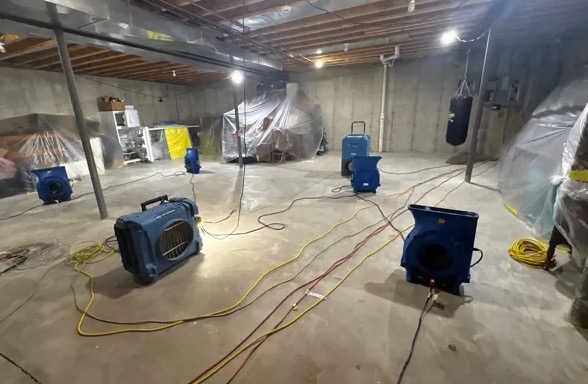
Basement Water Damage Restoration for Madrid Homes
Basement Water Damage Restoration in Madrid usually involves two parts: the emergency work of removing water and the slower work of drying a below-grade space. Both matter for keeping repairs small.
In Madrid, a home with a basement or below-grade room can flood after heavy rain or a blocked sewer line. Local water removal pros serve Madrid, Woodward, Slater and Granger, pumping out water and drying finished and unfinished spaces.
Basement Water Damage Restoration Solutions Available in Madrid
Basement Dehumidification
Large dehumidifiers pull moisture from the basement air so walls, framing and the slab can release their water.
Basement Mold Prevention
After drying, an antimicrobial can be applied to framing and concrete that were wet, to slow mold on surfaces that stay in place.
Basement Floor Water Removal
Wet carpet pad is removed from basement floors, since it holds water against the concrete and dries poorly.
Basement Wall Drying
Finished basement walls hide wet insulation and framing. Removing the bottom of the drywall lets air reach the cavity.
Basement Sewer Backup Cleanup
Porous materials touched by sewage, such as carpet, pad and lower drywall, are removed. Concrete and framing are cleaned and disinfected.
When to Consider Basement Water Damage Restoration for Your Madrid Home
Wet or Stained Basement Walls
Dark, wet patches or tide lines on basement walls show where water seeped in or wicked up.
Mold on Surfaces
Dark spots on drywall, framing or stored boxes mean the area has stayed wet for days.
Warped or Buckling Basement Floors
Laminate, wood or vinyl flooring that buckles or lifts in the basement has water underneath.
High Humidity Levels Below-Grade
A basement that stays damp and clammy even on dry days has a moisture source that needs attention.
How Basement Water Damage Restoration Works in Madrid
Step 1: Initial Assessment and Water Removal
The source and type of water are identified, and standing water is removed right away.
Step 2: Focused Drying of Materials
Walls, framing and the slab are dried with directed airflow, with wet insulation removed.
Step 3: Air Quality Management
Air scrubbers filter dust and odors from removal work while drying continues.
Step 4: Documentation for Restoration
Photos, readings and a list of removed materials are prepared for insurance and rebuilding.
Frequent Sources of Water Damage in Madrid
Faulty Basement Waterproofing
Old or failed waterproofing on foundation walls lets water through during wet weather.
High Water Table and Hydrostatic Pressure
A high water table pushes groundwater up through the slab and into the joints between wall and floor.
Foundation Cracks and Leaks
Cracks in foundation walls let groundwater and melting snow seep into the basement.
Water Heater or Appliance Leaks
Water heaters, washers and utility sinks in the basement can leak or fail without warning.
Both Residential & Commercial Basement Water Damage Restoration in Madrid
Residential Basement Water Damage Restoration
Finished basements used as living space need carpet, pad and lower drywall checked carefully. Soaked materials are removed so the walls and slab can dry.
Commercial Basement Water Damage Restoration
Businesses with below-grade storage need inventory moved out of the water quickly. Wet stock is separated and documented for insurance.
When to DIY and When to Call the Pros for Basement Water Damage Restoration
Fans alone can push damp air into the rest of the house. Basement drying needs dehumidifiers to pull the moisture out of the air and the concrete.
Factors Affecting Basement Water Damage Restoration Cost in Madrid
The cost of basement water damage restoration in Madrid depends on how much water there is, whether it is clean or sewage and how much finished material must be removed.
Drying Time Required
Basements dry slowly, and longer drying means more equipment days and monitoring visits.
Water Category
Clean water costs less to handle than sewage, which needs protective gear, removal and disinfection.
Material Saturation
Finished basements with carpet, drywall and insulation take more removal work than bare concrete.
Does Insurance Cover Basement Water Damage Restoration?
Coverage for basement water damage restoration depends on where the water came from and your policy terms. The pros document the damage, and your insurer decides what is covered.
The Value of Local Pros for Basement Water Damage Restoration in Madrid
Advanced Moisture Detection
Moisture meters and thermal cameras find water in walls and slabs that looks dry.
24/7 Emergency Response
Help is available day or night when water is rising in the basement.
Water Type Handling
Clean water, gray water and sewage are each handled with the right protection and removal steps.
24/7 Emergency Basement Water Damage Restoration for Madrid
Sewage coming up through a floor drain? Stop using water in the house and call (515) 575-2930 now for basement water damage restoration in Madrid.
Call Now (515) 575-2930Local Basement Water Damage Restoration Coverage: Madrid and Beyond
Nearby areas served for basement water damage restoration include Woodward, Slater and Granger, with the same pumping and drying steps used in Madrid.
- Basement Water Damage Restoration in Woodward
- Basement Water Damage Restoration in Slater
- Basement Water Damage Restoration in Granger
- Basement Water Damage Restoration in Polk City
- Basement Water Damage Restoration in Huxley
- Basement Water Damage Restoration in Boone
- Basement Water Damage Restoration in Grimes
- Basement Water Damage Restoration in Alleman
- Emergency Damage Restoration in 50156
- Storm Damage Restoration in 50156
- Water Damage Restoration in 50156
- Water Extraction Service in 50156
- Water Leak Detection in 50156
- Water Removal Service in 50156
Basement Water Damage Restoration Common Questions Answered
How soon should I call for basement water extraction after a leak?
Right away. Water wicks up drywall and soaks framing within hours, and below-grade spaces are slow to dry.
What health risks come with delayed basement flood cleanup?
Standing water and wet materials can support bacteria and microbial growth, and sewage carries contaminants that need disinfection.
What equipment is used for below-grade water damage repair?
Submersible pumps, extractors, air movers, large dehumidifiers, moisture meters and air scrubbers for dust and odor.
What causes the most common below-grade leaks in homes?
Sump pump failures, foundation cracks, clogged drain tile, sewer backups and burst pipes in the basement ceiling.
What are signs of hidden moisture after below-grade water extraction?
Musty smells, tide lines on walls, damp carpet edges and moisture readings that stay high in walls or the slab.