Collins, IA · Story County
Basement Water Damage Restoration in Collins, IAEmergency Basement Flood Cleanup & Basement Drying Services
Basement Water Damage Restoration in Collins runs from basement water extraction and basement floor water removal to basement dehumidification.
Answered 24/7
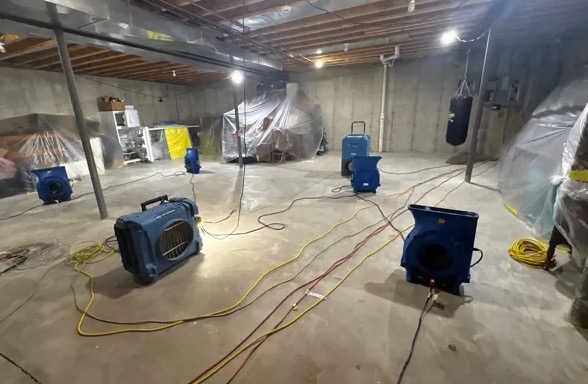
Professional Basement Water Damage Restoration in Collins, IA
In Collins, a damp, musty basement or lower room often means water damage that was never fully dried. Old leaks can leave moisture in walls and under flooring long after the water is gone.
Homeowners in Collins can call (515) 575-2930 day or night when water is rising in the basement. Service also covers Maxwell, Colo and Baxter, with the same pumping and drying steps.
The Basement Water Damage Restoration Process in Collins
Emergency Basement Flood Cleanup
Help is available any hour when water is rising in the basement from a burst pipe, a sewer backup or heavy rain.
Basement Drying Services
Drying a basement takes longer than drying an upper floor because the air is cool and the concrete holds moisture.
Basement Dehumidification
A basement with no moisture problem before the flood may still need a dehumidifier afterward while the concrete dries.
Basement Mold Prevention
After drying, an antimicrobial can be applied to framing and concrete that were wet, to slow mold on surfaces that stay in place.
Basement Water Extraction
Basement water is removed before drying starts, because every gallon left behind keeps the walls and air damp.
How to Know You Need Basement Water Damage Restoration in Collins
Peeling Paint or Wallpaper
Paint that peels or blisters on basement walls often has moisture behind it.
Warped or Buckling Basement Floors
Laminate, wood or vinyl flooring that buckles or lifts in the basement has water underneath.
High Humidity Levels Below-Grade
A basement that stays damp and clammy even on dry days has a moisture source that needs attention.
Sewage Odors or Backups
Sewage smells or water coming up through a floor drain mean the sewer line is backing up.
How Basement Water Damage Restoration Works in Collins
Step 1: Source Control and Extraction
The pipe is shut off, the sump restarted or the backup stopped, then the water is pumped out.
Step 2: Structural Drying Setup
Lower drywall is removed where soaked, and equipment is placed to dry wall cavities and the slab.
Step 3: Contaminant Removal
Materials touched by sewage or dirty water are removed and hard surfaces are cleaned and disinfected.
Step 4: Monitoring and Completion
Daily readings track drying until every material is normal, then equipment is removed.
Common Causes of Water Damage in Collins
HVAC Condensate Line Overflow
A clogged furnace or air conditioner condensate line can overflow onto the floor of a basement or lower-level utility room.
High Water Table and Hydrostatic Pressure
A high water table pushes groundwater up through the slab and into the joints between wall and floor.
Water Heater or Appliance Leaks
Water heaters, washers and utility sinks in the basement can leak or fail without warning.
Failed or Clogged Drain Tile
Clogged or collapsed drain tile around the foundation lets water build up against the walls.
Basement Water Damage Restoration for Homes and Businesses in Collins
Residential Basement Water Damage Restoration
In homes, a flooded basement often means damaged carpet, drywall, a furnace or water heater and stored belongings. Water is pumped out, contents are moved and the space is dried.
Commercial Basement Water Damage Restoration
In commercial buildings, basements hold mechanical rooms, storage and sometimes offices. Water is removed and equipment areas are dried so systems can be checked and restarted.
Professional Basement Water Damage Restoration or DIY in Collins?
Sewage in a basement should not be cleaned up without gloves, boots and eye protection. For any backup through a floor drain or toilet, call local water removal pros.
What Influences Basement Water Damage Restoration Cost in Collins
Sewage cleanup, finished walls, storm-night calls and damaged appliances all add to the total for basement water damage restoration in Collins.
Emergency Service
Night, weekend and storm calls can cost more than a scheduled visit.
Water Category
Clean water costs less to handle than sewage, which needs protective gear, removal and disinfection.
Drying Time Required
Basements dry slowly, and longer drying means more equipment days and monitoring visits.
Does Insurance Cover Basement Water Damage Restoration?
Many homeowner policies cover sudden basement water from a burst pipe, but not seepage or groundwater. Sewer backup coverage is often a separate add-on, so check your policy.
Reasons to Hire Local Pros for Basement Water Damage Restoration in Collins
Detailed Documentation
Photos, readings and drying logs are kept to support your insurance claim.
Industry Drying Standards
Drying follows industry water damage standards, with readings taken at every visit.
Industrial-Grade Equipment
Pumps, extractors and large dehumidifiers remove water much faster than household wet vacs and fans.
Collins Emergency Basement Water Damage Restoration Response
Every hour of standing water in a basement means more drywall and flooring to replace. Call (515) 575-2930 for basement water damage restoration in Collins.
Call Now (515) 575-2930Local Basement Water Damage Restoration Coverage: Collins and Beyond
Nearby areas served for basement water damage restoration include Maxwell, Colo and Baxter, with the same pumping and drying steps used in Collins.
- Basement Water Damage Restoration in Maxwell
- Basement Water Damage Restoration in Colo
- Basement Water Damage Restoration in Baxter
- Basement Water Damage Restoration in State Center
- Basement Water Damage Restoration in Melbourne
- Basement Water Damage Restoration in Nevada
- Basement Water Damage Restoration in Cambridge
- Basement Water Damage Restoration in Elkhart
- Emergency Damage Restoration in 50055
- Storm Damage Restoration in 50055
- Water Damage Restoration in 50055
- Water Extraction Service in 50055
- Water Leak Detection in 50055
- Water Removal Service in 50055
Basement Water Damage Restoration FAQs
What causes the most common below-grade leaks in homes?
Sump pump failures, foundation cracks, clogged drain tile, sewer backups and burst pipes in the basement ceiling.
How is basement restoration documented for insurance?
With photos of the water level and damage, moisture readings, a list of removed materials and daily drying logs.
How soon should I call for basement water extraction after a leak?
Right away. Water wicks up drywall and soaks framing within hours, and below-grade spaces are slow to dry.
How long does below-grade drying take after a flood?
Often several days or longer, since concrete and cool basement air dry slowly. Daily readings show progress.
What are signs of hidden moisture after below-grade water extraction?
Musty smells, tide lines on walls, damp carpet edges and moisture readings that stay high in walls or the slab.